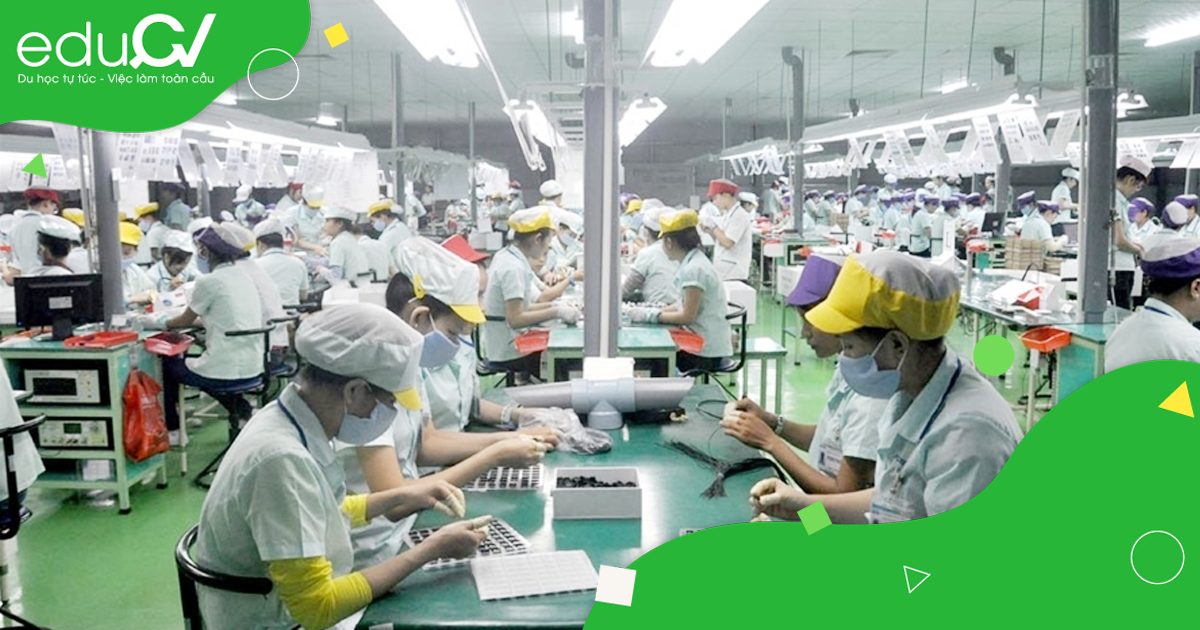
The German skilled worker visa is a type of visa for foreigners with professional qualifications who want to work legally in Germany. After the Skilled Labor Immigration Act was reformed, Germany expanded many visa categories with more flexible conditions, creating additional opportunities for international workers, including those from Vietnam. The article below will fully update the types of skilled worker visas for Germany in 2026, including the conditions, documents, and application process according to the latest regulations.
1. What is the German Skilled Worker Visa?
The German Skilled Worker Visa is a long-term visa for workers outside the European Union (EU) who have the appropriate qualifications, degrees, or skills to work in Germany. This is one of the important policies that helps Germany attract international human resources to address the labor shortage in many fields such as nursing, mechanics, electricity, IT, construction, hospitality, and logistics.
Unlike before, since the Skilled Immigration Act was amended and implemented in phases starting from the end of 2023, workers have more options when applying for work visas in Germany. Depending on the level of education, vocational qualifications, employment contracts, or the purpose of coming to Germany to seek employment, each individual will be suited for a different type of visa.
Currently, the German skilled worker visa is not only for those who have a university degree but also extends to:
- Those who have graduated from vocational schools, colleges, or recognized vocational training programs.
- People with practical work experience in certain professions.
- Someone who wants to go to Germany to learn a trade and work long-term.
- People who want to go to Germany to find a job thru the Opportunity Card.
This is also an important foundation for workers to develop their careers, sponsor their families, and aim for long-term residency if they meet the conditions set by Germany.

2. Update on popular German skilled worker visas in 2026
After the Skilled Labor Immigration Law was amended, Germany's labor visa system was expanded to meet the demand for high-quality workforce recruitment in various industries. Each type of visa will apply to different groups of individuals, depending on their professional qualifications, degrees, work experience, and whether or not they have a job contract.
Below are the 5 most common skilled worker visas for Germany in 2026 that Vietnamese workers need to know.
>>> Reasons why the German vocational student visa is denied
2.1. Visa §18b (For university graduates)
Visa under Section 18b of the German Residence Act (AufenthG) is for individuals who have graduated from university or hold an academic degree recognized in Germany and have received a job offer from a company in Germany. This is one of the most common types of visas for engineers, IT specialists, accountants, teachers, financial experts, and many professions that require a university degree.
Basic requirements
- Have a university degree recognized by Germany or equivalent.
- Have an employment contract or a job offer from a company in Germany.
- The job matches the trained specialization.
- Meet the residency and visa issuance requirements as per regulations.
Benefits
- Working legally in Germany.
- Extend the residence permit according to the contract duration.
- There is an opportunity to transition to permanent residency if the conditions are met.
- Can sponsor spouse and children according to current regulations.
Visa §18b is suitable for those who already have an academic background and want to work long-term in Germany but do not meet the EU Blue Card requirements or do not need to apply for an EU Green Card.
2.2. Visa 18a (For skilled workers with vocational training)
Visa §18a is granted to individuals who have completed vocational training programs or hold vocational qualifications recognized by Germany and have employment that matches their expertise. This is the type of visa that many Vietnamese workers choose when working in the fields of nursing, mechanics, electricity, welding, construction, cooking, or the restaurant and hotel industry.
Basic conditions
- Have a vocational qualification or vocational training program recognized by Germany.
- Have an employment contract in Germany.
- The job is suitable for the field of training.
- Meet the entry and residence requirements.
Benefits
- Can work full-time.
- Can extend the residence permit.
- There is an opportunity to transition to permanent residency when eligible.
- Entitled to labor and social security benefits like workers in Germany.
This visa category is suitable for the majority of technical and skilled workers who wish to work in Germany.
2.3. EU Blue Card
The EU Blue Card is a special residence permit for highly skilled workers. Compared to a regular work visa, the EU Blue Card offers more benefits such as faster permanent residency processing, ease of job switching, and family reunification opportunities.
To be granted an EU Blue Card, workers need:
- Have a university degree or an equivalent recognized qualification.
- Have an employment contract in Germany with a minimum duration of 6 months.
- The job matches my expertise.
- Meeting the minimum salary threshold as per annual regulations.
According to the 2026 update, the minimum salary to apply for an EU Blue Card is:
- 50,700 EUR/year for most professions.
- 45,934.20 EUR/year for sectors with a labor shortage (STEM, IT, healthcare, education...) or for workers who have graduated within the last 3 years, if they meet the specified conditions.
This is a suitable option for engineers, IT specialists, doctors, researchers, and positions with high income levels.
2.4. Vocational training visa (Ausbildung)
The Ausbildung visa is for foreigners participating in the dual vocational training program in Germany. Unlike a regular work visa, students not only learn theory at vocational schools but also practice at companies and receive a monthly allowance throughout the training period.
After graduation, students can:
- Transition to a skilled worker visa.
- Sign an official contract with the company.
- Continue living and working long-term in Germany if you meet the regulations.
This is a path chosen by many young Vietnamese due to low training costs, high job opportunities, and the possibility of long-term settlement.
Basic requirements:
- Age under 35
- Completed high school + vocational training contract
- German B1 (B2 for the nursing field)
- Internship salary from 1,000 EUR/month and above
2. 5. Job Opportunity Card (Chancenkarte - 20a, 20b)
The Opportunity Card is a new policy implemented by Germany to facilitate foreign workers coming to Germany to find jobs without the requirement of having a work contract before entering the country.
Benefits
- Allows residence for up to 12 months to seek employment or apply for degree recognition in Germany.
- Allowed to work a maximum of 20 hours/week or do an internship for a maximum of 2 weeks.
- When you find a full-time job, you can directly switch to various types of work visas or the EU Blue Card right in Germany.
During this time, the focus should be on finding a job. You can extend your stay with the Opportunity Card for a maximum of two more years. You must submit an application for an extension at the local Foreign Registration Office. Local foreigner.
To be eligible to apply for the Opportunity Card, you must meet the basic criteria:
- Educational qualifications: A university degree or a vocational qualification recognized in Germany (minimum training duration of 2 years).
- Language proficiency: German certificate (minimum A1 level) or English certificate (minimum B2 level).
- Age: Under 35 years old (preferred) or from 35-40 years old
3. Conditions for the German work visa 2026
To be granted a German skilled worker visa, employes must meet the conditions set forth in the German Residence Act (Aufenthaltsgesetz) and the regulations related to the Skilled Immigration Act. Depending on the type of visa (§18a, §18b, EU Blue Card, or Chancenkarte), the requirements may vary, but generally revolve around the following four groups of conditions.
3.1. Have appropriate degrees or professional qualifications
Germany prioritizes the acceptance of skilled workers to address the labor shortage. Therefore, visa applicants need to have:
- A university degree, college degree, or vocational certificate relevant to the intended job
- The professional qualification is recognized in Germany or eligible for recognition.
- For certain regulated professions (nursing, doctors, teachers...), it is mandatory to complete the degree recognition process before starting work.
For some non-regulated professions, employes may be accepted if they have many years of practical experience and meet the employer's requirements.
3.2. Have an employment contract or a job invitation letter
This is a mandatory requirement for most work visa categories (§18a, §18b, and EU Blue Card). The employment contract must clearly state:
- Job title.
- Salary.
- Working hours.
- Work location.
- Contract duration.
In addition, the job must match the worker's qualifications or experience.
Exception: With the Opportunity Card (Chancenkarte), workers can enter the country to look for a job without needing a work contract beforehand.
3.3. Meeting the foreign language requirement
Not all visa categories require a German language certificate. The requirements will depend on the profession and the employer.
Usually:
- Nursing: requires German language proficiency at B1 or B2 level.
- Chefs, mechanics, electricians, restaurant – hotel: many companies require from A2 to B1.
- IT and some international sectors: English can be used if the company accepts it.
Therefore, workers should check the specific requirements of each recruitment program instead of assuming that all visa categories require a German language certificate.
3.4. Meet health and background check requirements
Visa applicants need:
- A valid passport.
- Not subject to entry bans into Germany or the Schengen area.
- Has health insurance as required.
- No criminal record affecting visa issuance.
In some cases, a health check or additional documentation may be required depending on the profession and the requirements of the reviewing agency. The German skilled worker visa is a gateway for Vietnamese workers to access high-quality job markets with attractive income, good welfare benefits, and long-term development opportunities in Europe.
However, each type of visa such as 18a, 18b, EU Blue Card, Ausbildung Visa, or Opportunity Card (Chancenkarte) has its own target audience, conditions, and approval process. Therefore, correctly identifying the visa category from the beginning and preparing a complete and accurate application will increase the chances of obtaining the visa and shorten the processing time.
If you are planning to work in Germany in 2026, proactively research the latest regulations, and choose a program that matches your qualifications, experience, and career goals to ensure an effective and sustainable path to Germany.
EduCV - THE PLATFORM CONNECTING GLOBAL EDUCATION AND EMPLOYMENT
Website: https://educv.com/ Fanpage: https://www.facebook.com/Educvvietnam Address: 5th Floor, Song Long LS5 Building, Trung Hoa Ward, Cau Giay District, Hanoi City, Vietnam Email: educvteam.partnerships@gmail.com Hotline: 0978 105 086 |